Date:
Oct 27,30th - Nov 04,14,17-19th - 2025
•
Exposure:
81 x 10 minutes Halpha (13hrs 30mins)
67 x 10 minutes SII (11hrs 10mins)
73 x 10 minutes OIII (12hrs 10mins)
Total: 36hr 50min
About This Image
Gear:
Telescope: Stellarvue SVX130T-R
Mount: Software Bisque Paramount MX
Camera: Player One Poseidon-M Pro
Filter: Antlia Pro 3nm OIII • Antlia Edge 4.5nm Ha • Antlia Pro 3nm SII
Accessories: 3.5" Feathertouch • Stellarvue SFFRX-130140
Guiding: Player One FHD-OAG MAX • Player One Ceres-462M • PHD2
Software: Photoshop • PixInsight • TheSkyX • Starkeeper Voyager
Description:
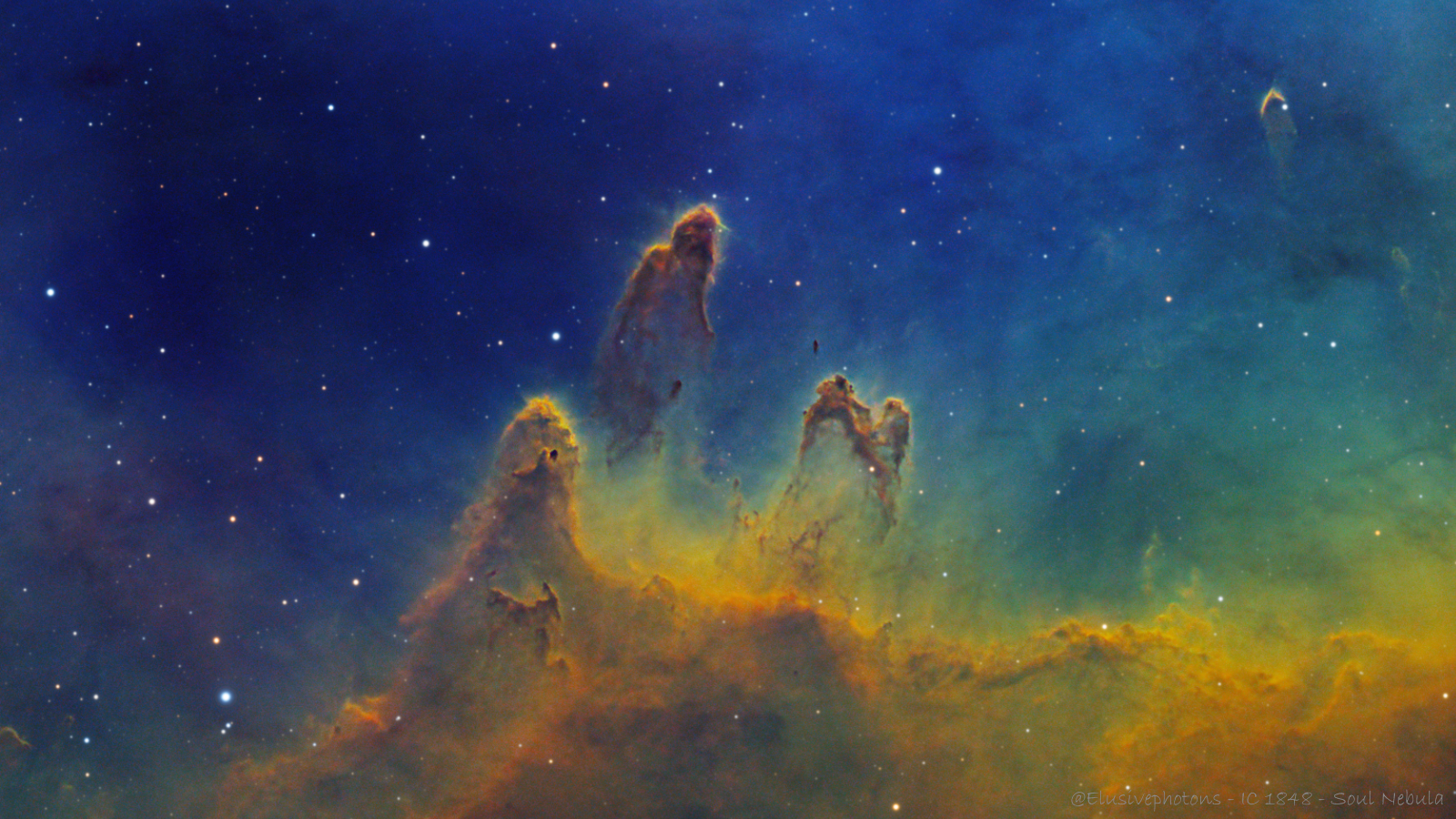
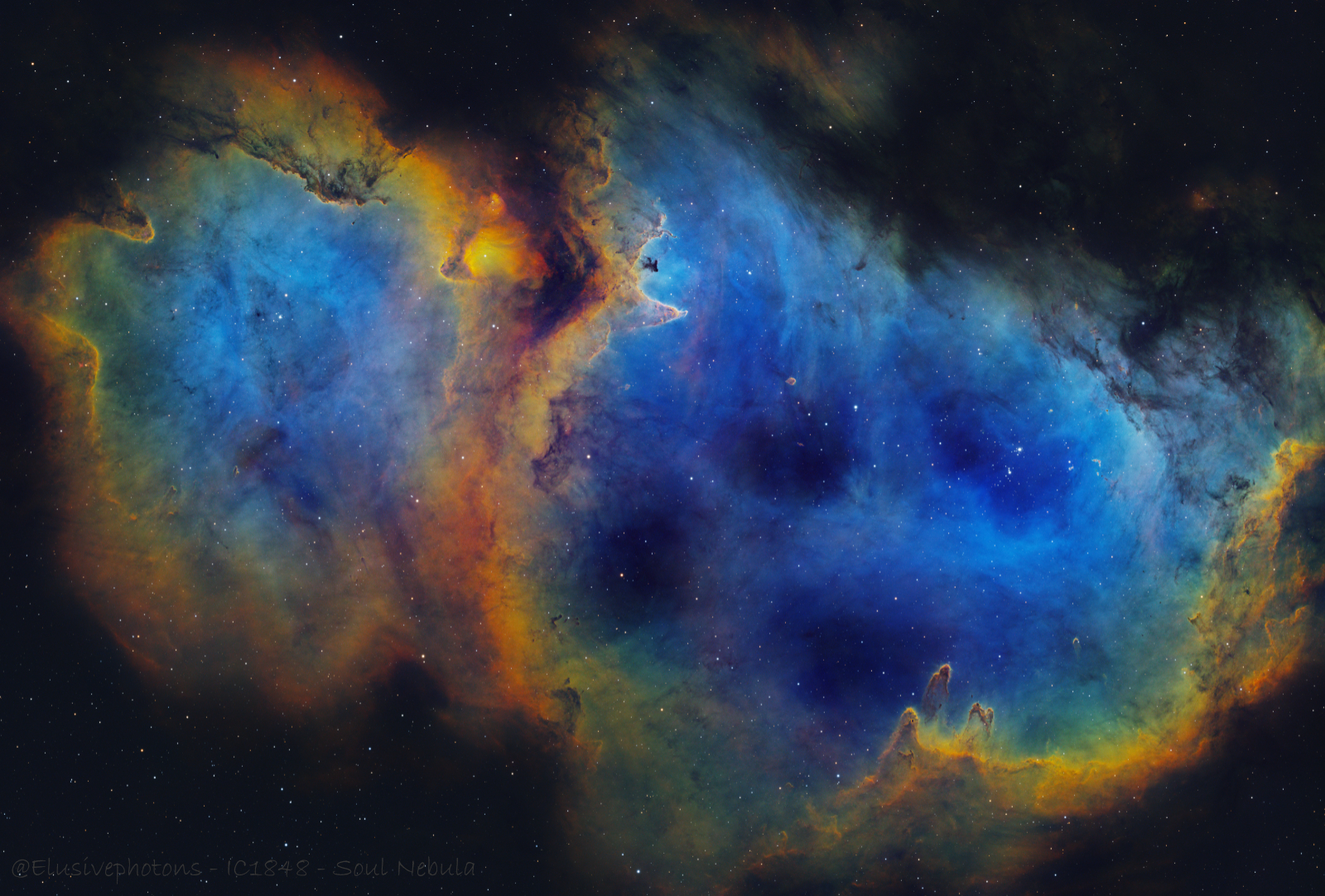
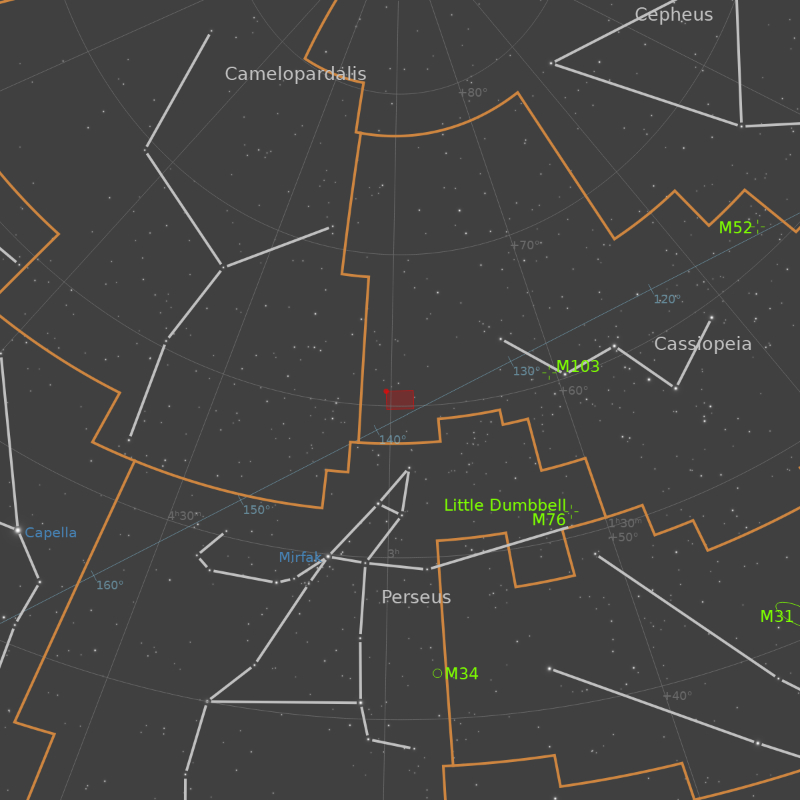
The Soul Nebula stretches across the constellation Cassiopeia like a glowing landscape of clouds, cavities, and hidden stars. Also known as Westerhout 5, or W5, it lies approximately 6,500 light-years from Earth and spans about 150 light-years. Frequently photographed beside the neighboring Heart Nebula, the Soul shines predominantly red in visible-light images because excited hydrogen gas emits that distinctive color. Its luminous outline marks an immense stellar nursery, not a solid boundary: within it, stars are continually reshaping their surroundings.
Inside the nebula, massive young stars act as both illuminators and sculptors. Their intense radiation and powerful winds sweep aside surrounding gas and dust, hollowing out enormous cavities and leaving dense ridges and pillars behind. Infrared observations from NASA's Spitzer Space Telescope reveal a striking arrangement: older stars occupy the centers of two cavities, while younger stars gather along their rims and at the tips of elephant-trunk-like pillars. Several open star clusters inhabit this celestial landscape, making the Soul Nebula a place where different generations of stars share the same evolving cloud.
Sources:
[1] science.nasa.gov/image-article/apod-2025-december-17-w5-the-soul-nebula/
[2] clarkvision.com/galleries/gallery.NEW/web/ic1848-soul-nebula.c08.13.2015.0J6A5447-91av35-t2-rs90,3.g-1300vs.html
[3] clarkvision.com/galleries/gallery.NEW/web/ic1848-soul-nebula.c08.13.2015.0J6A5447-91av35-t2-rs90,3.g-1300vs.html
[4] apod.nasa.gov/apod/ap181128.html
Distance: 6,500 light-years
Size: 300 light-years
|
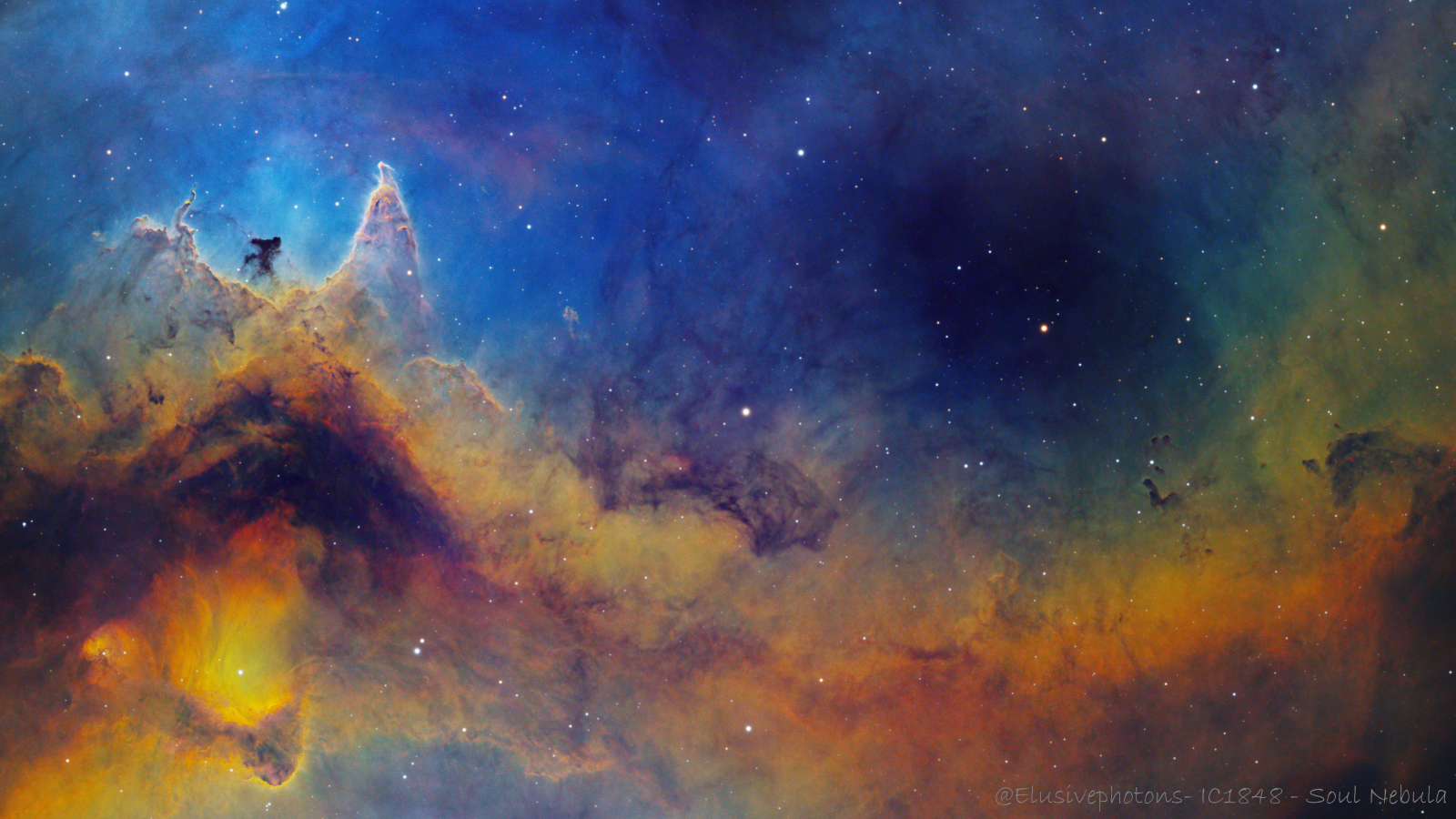
The Soul Nebula's star-forming regions reveal how stellar activity can help spark new stellar births. As massive stars clear their surroundings, they push gas into denser concentrations that can collapse under gravity—a process called triggered star formation. Spitzer observations found that stars become progressively younger farther from the cavity centers, providing evidence for this outward progression of starbirth. One particularly dramatic region, catalogued as IC 1871, contains dark, dense clouds edged by glowing gas and sculpted by nearby massive stars. NASA’s close-up of this region covers roughly 25 light-years, only a portion of the larger nebula, yet captures the interplay between clouds being eroded and new stars taking shape.
|

 Craig Sherris